Chrome, gold leaf, matte or gloss? Helmet finishes explained
Two helmets in the same colours can look completely different depending on the finish. A short guide to the effects you can choose for a custom helmet, with examples from the FreVyDesigns portfolio.
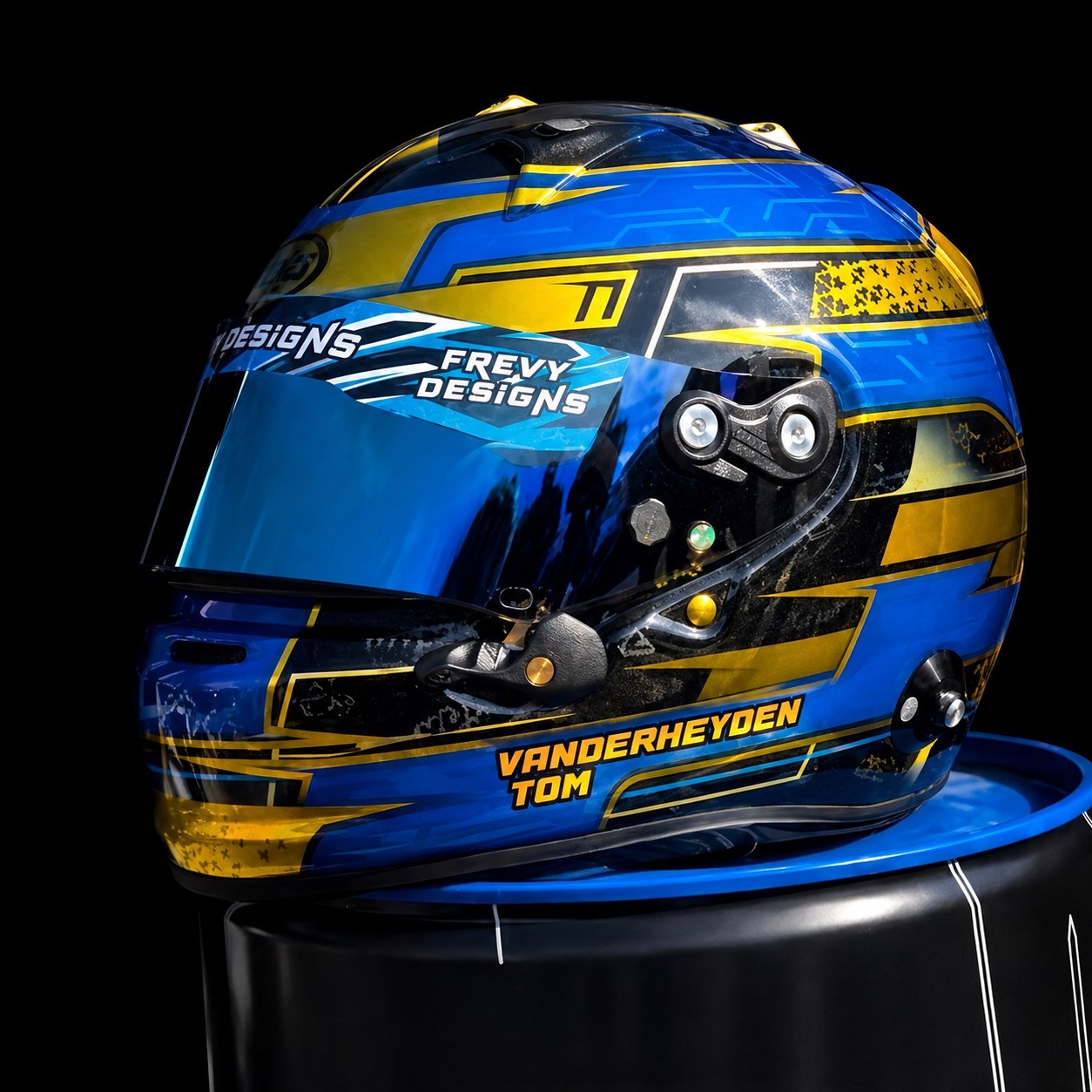
Colour is only half of a helmet design. The other half is how that colour behaves in the light. Does it shine, sparkle, reflect like a mirror, or stay deep and calm? These are the finishes and effects you can combine on a custom helmet.
Chrome paint and gold leaf
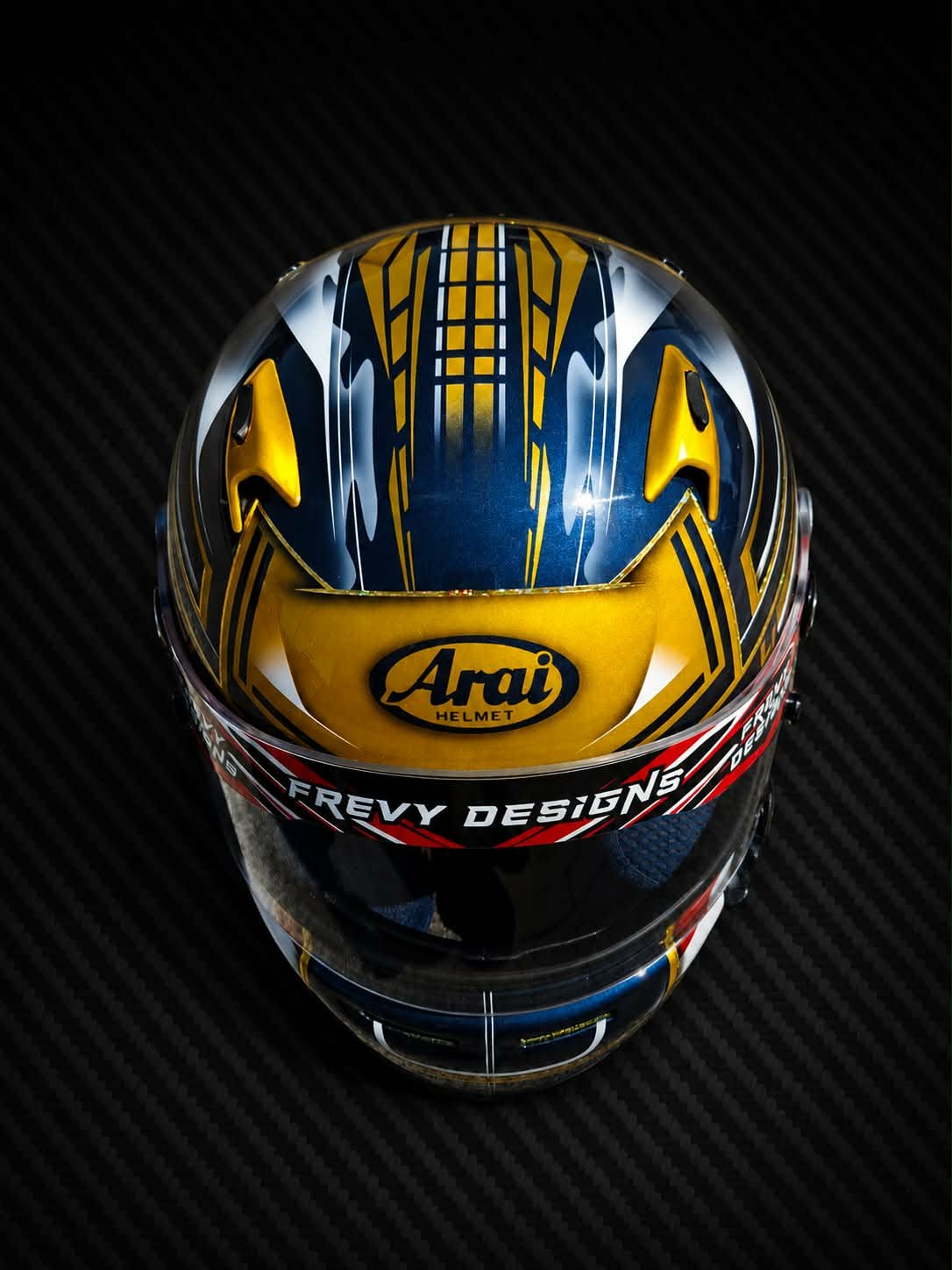
The most striking options. Chrome paint gives a mirror-like metallic surface that reflects everything around it. Gold leaf adds metal-leaf accents with a warm, rich glow. Tom Vanderheyden's helmet combines the two.
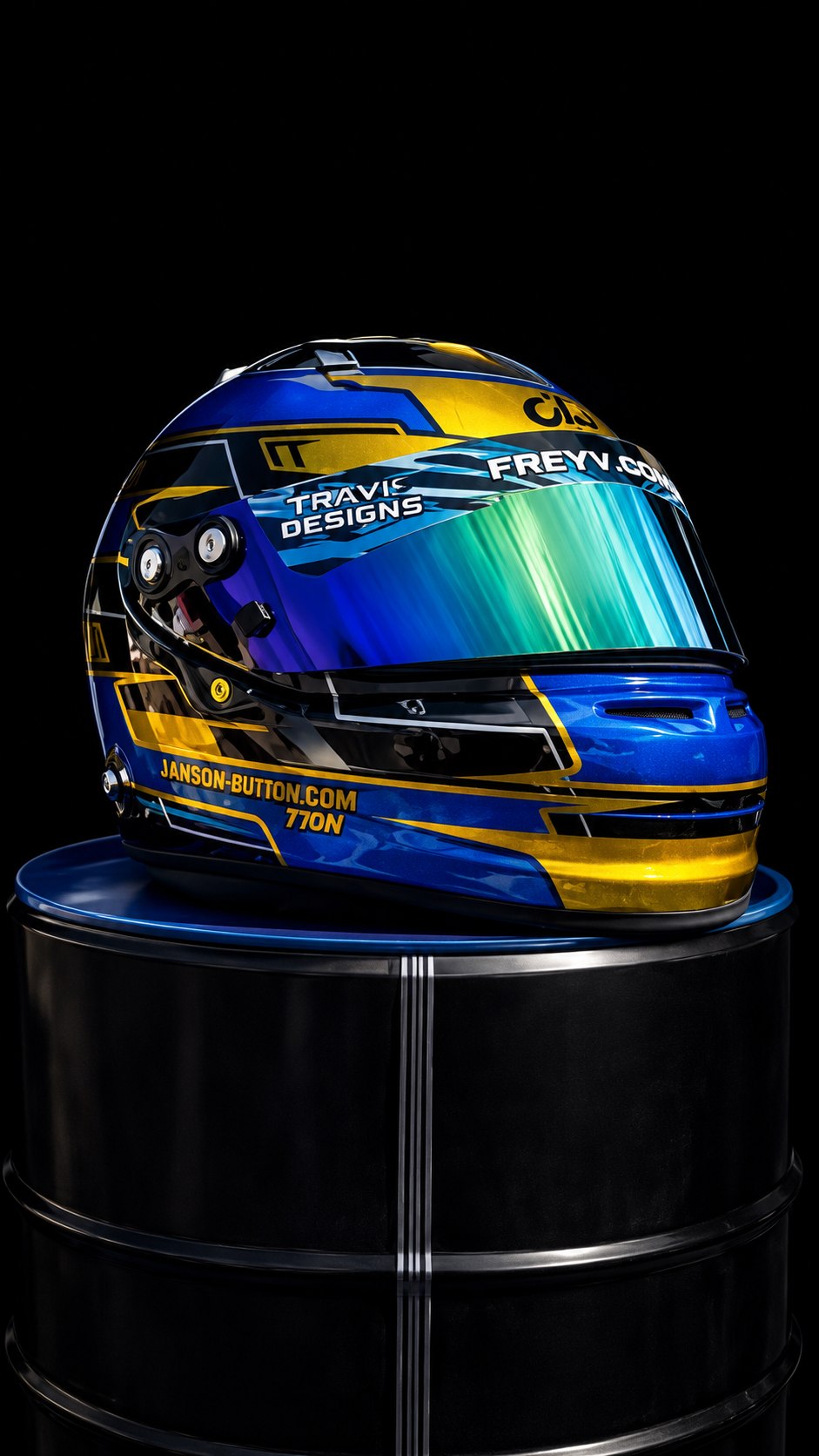
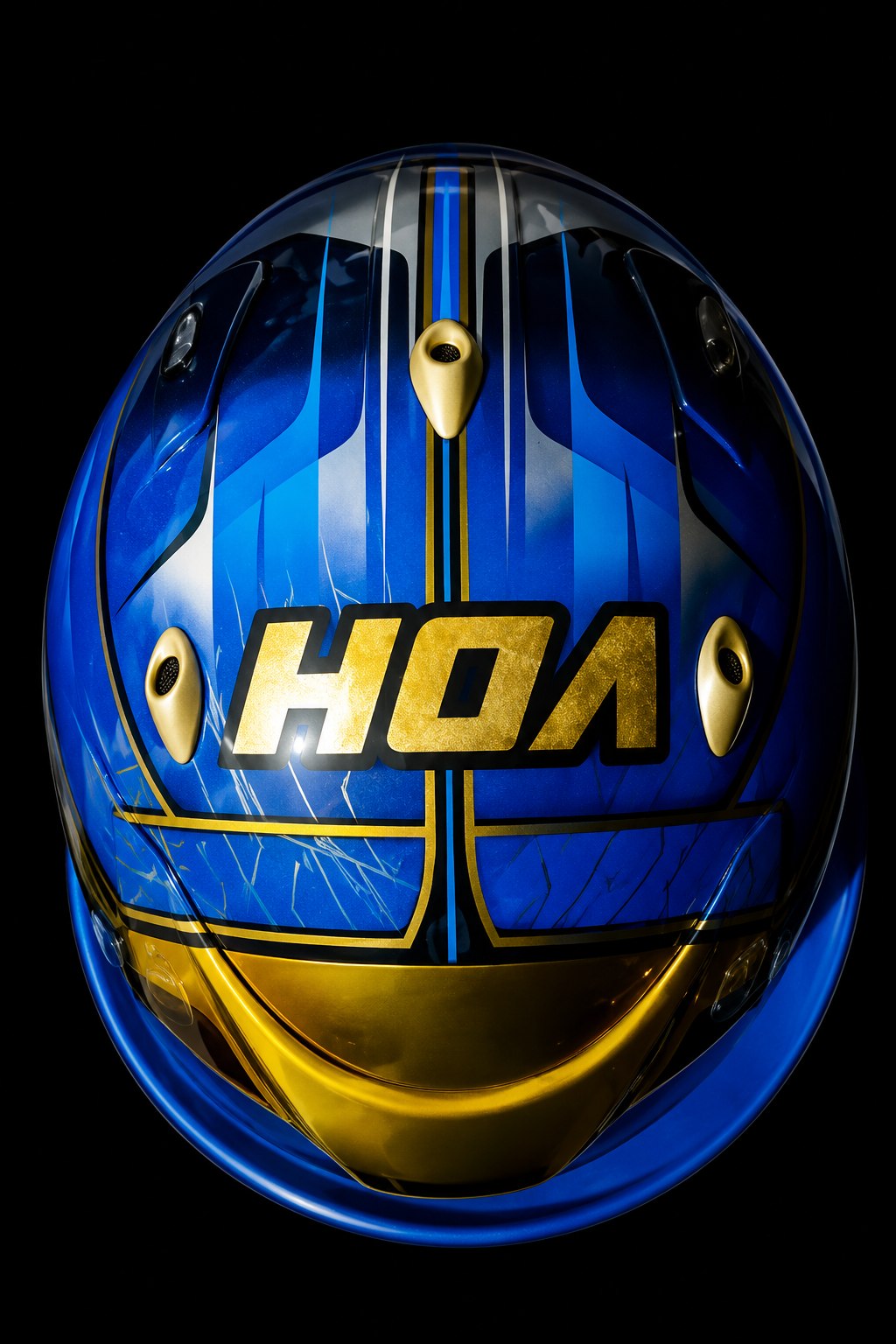
Metallic flakes
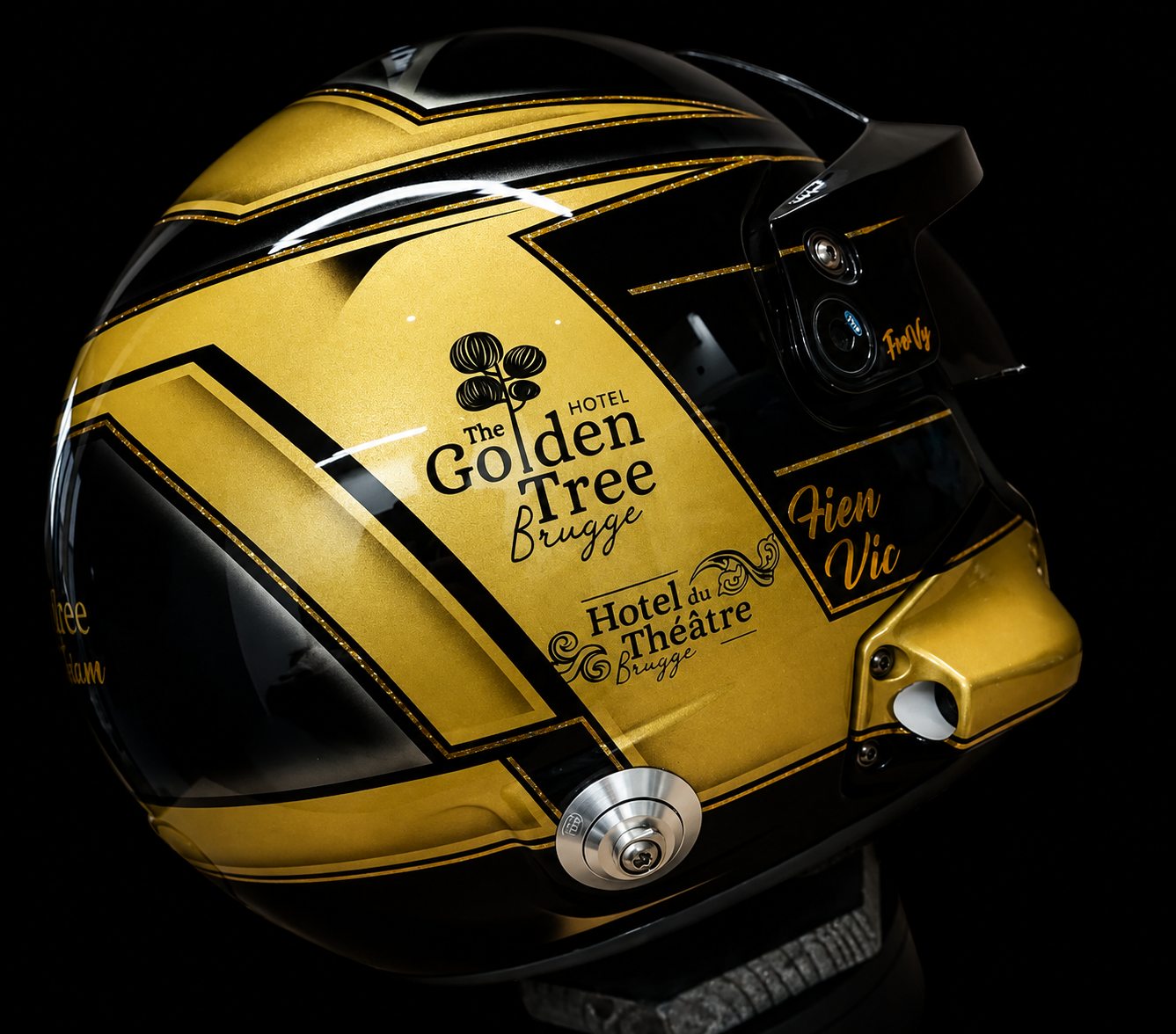
Fine pigments in the paint that react to the light. In the shade the colour looks calm; in the sun the whole surface comes alive. They work beautifully on a deep black or a strong base colour, like the gold-on-black helmet of The Golden Tree Racing Team.
Gradients
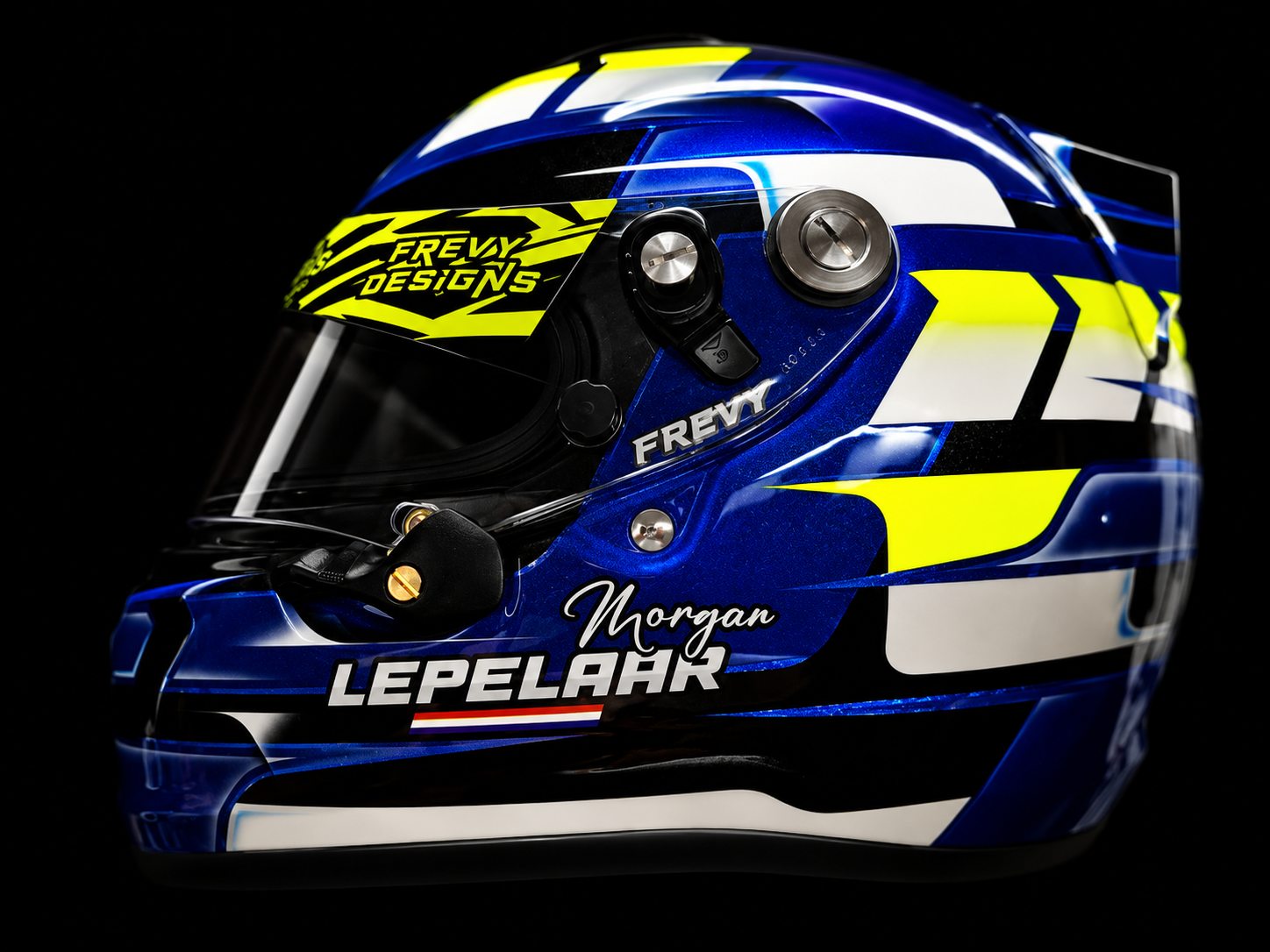
One colour flowing smoothly into another gives movement and depth, even when the helmet is standing still. A gradient is a great way to connect two main colours, as on Morgan Lepelaar's blue helmet with fluo yellow.
Airbrush
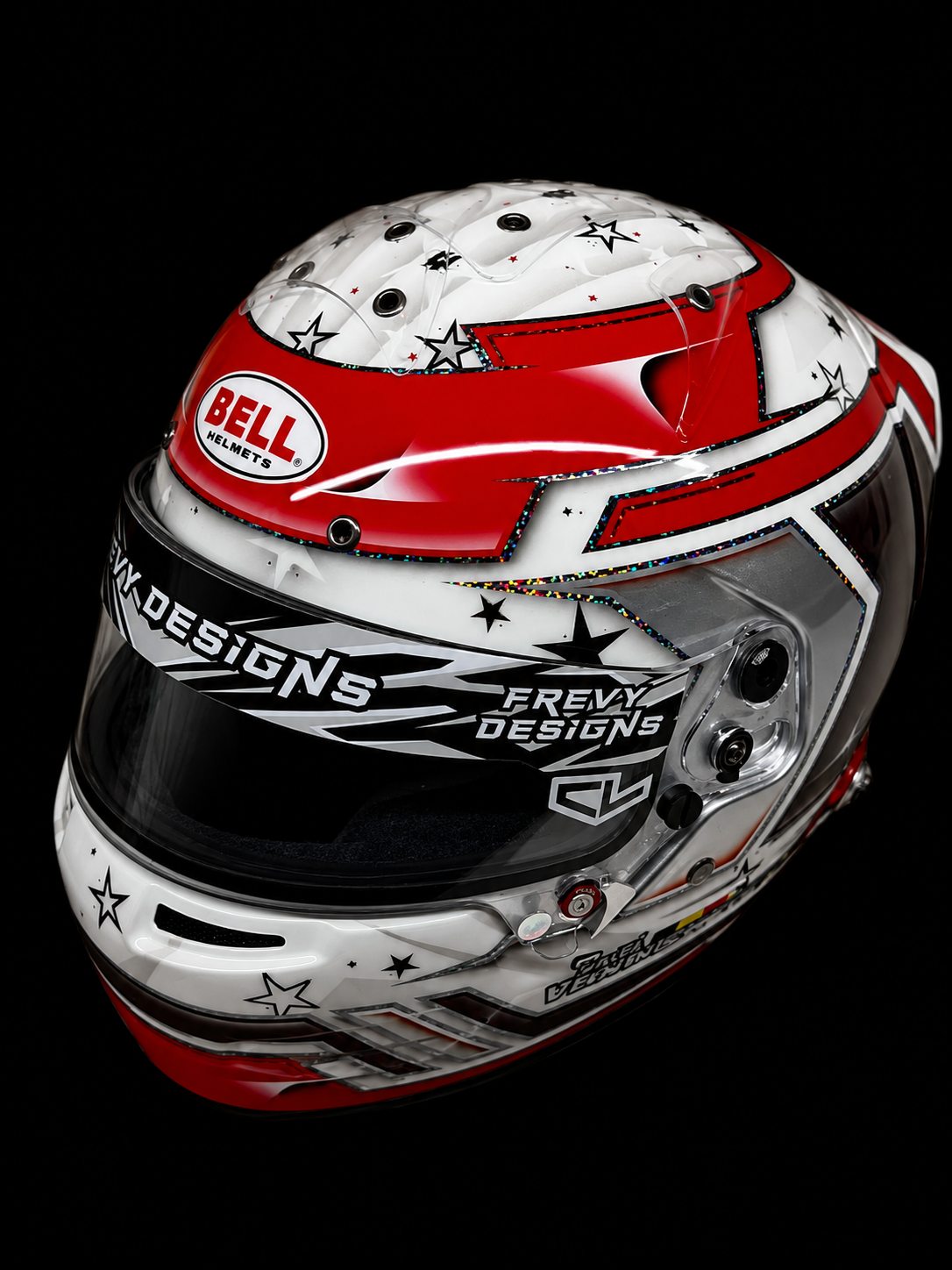
For details you cannot get with tape and straight lines: soft shadows, textures, illustrations and effects. Airbrush gives a helmet a hand-made character that no sticker can match.
Matte or gloss
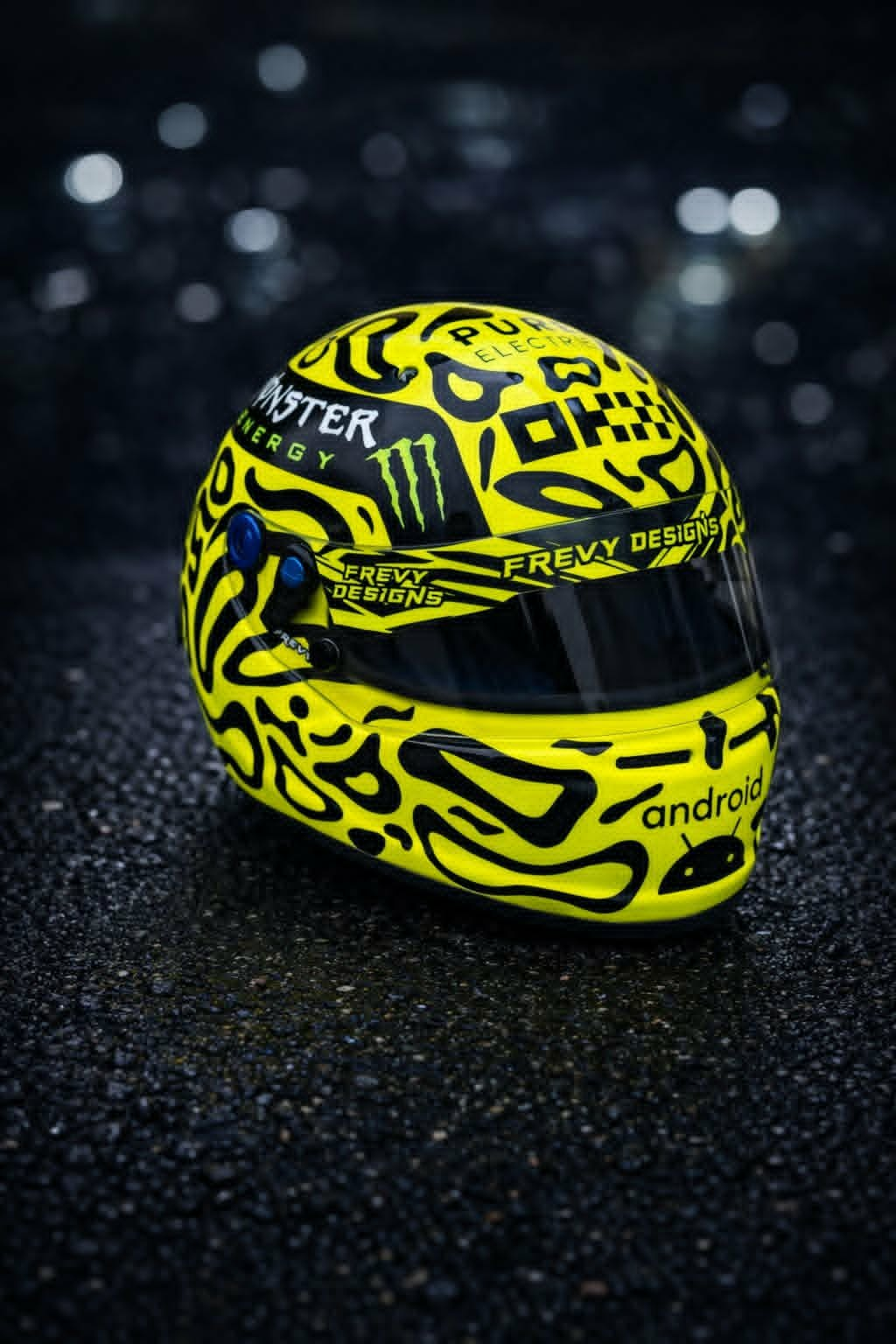
The clear coat decides the final look. Gloss makes colours deep and saturated, with that classic wet look. Matte feels raw, modern and understated. Luca Semler's fluo yellow doodle helmet shows how strong that can be.
Carbon
A carbon look or visible carbon gives a technical, motorsport feel. Combined with one strong colour, it stays clean and sporty.
Curious what is possible for your helmet? Tell us about your idea through the contact form.