7 tips for a helmet design that stands out on track
On the grid, in a photo or on a live stream, your helmet is often the only part of you people see. These tips help you get a design that is recognisable at a glance.
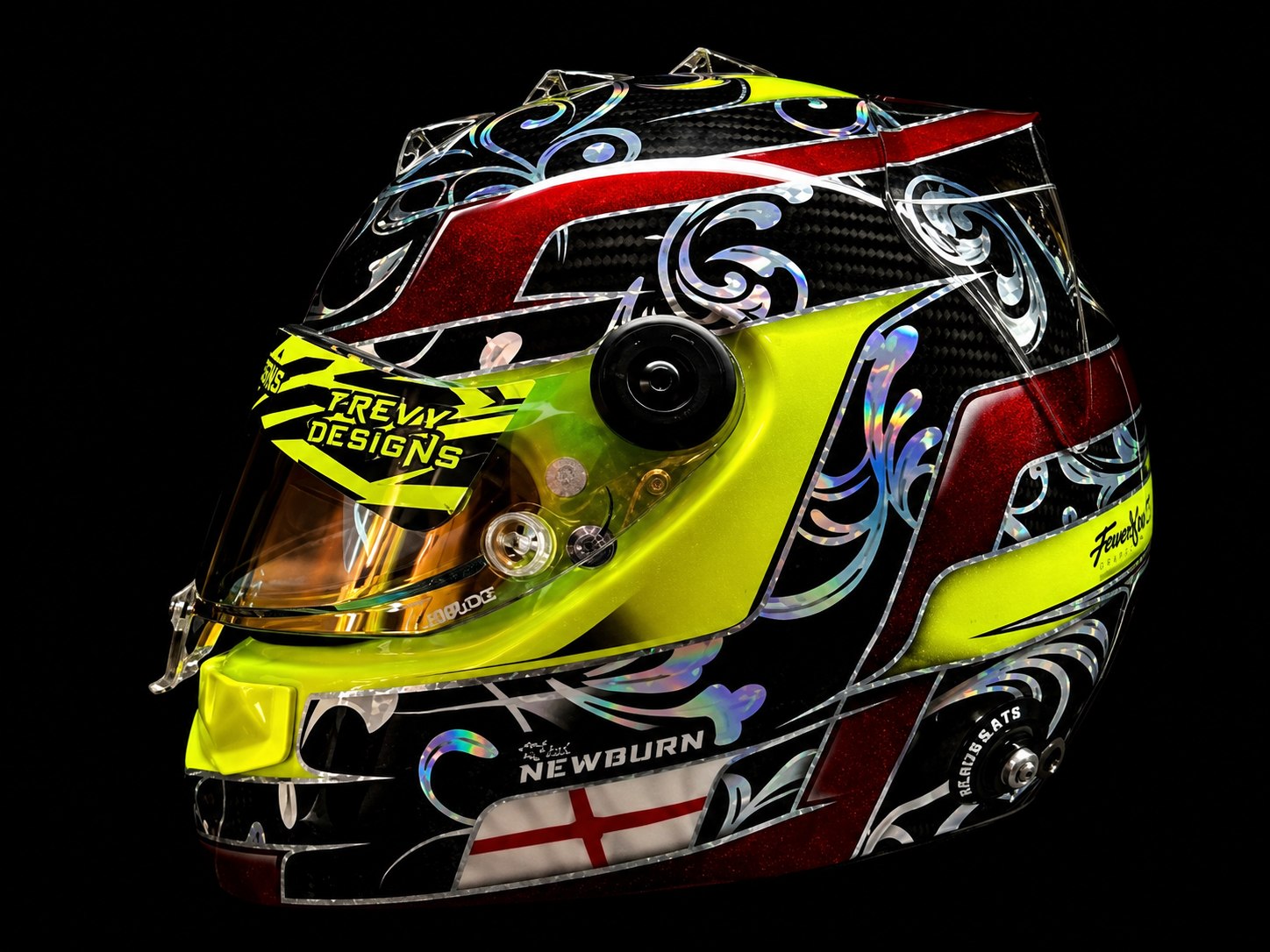
A great helmet design works at two distances. Up close in the paddock, every detail and every layer of lacquer counts. From a distance and at speed, people only see colour and shape. The best designs get both right.
1. Make it recognisable from a distance
Think about how your helmet looks from the grandstand or on a small phone screen. Strong shapes and a clear split between colours work better than lots of small details spread evenly. Keep the fine work for the parts people see up close.
2. Choose two or three main colours
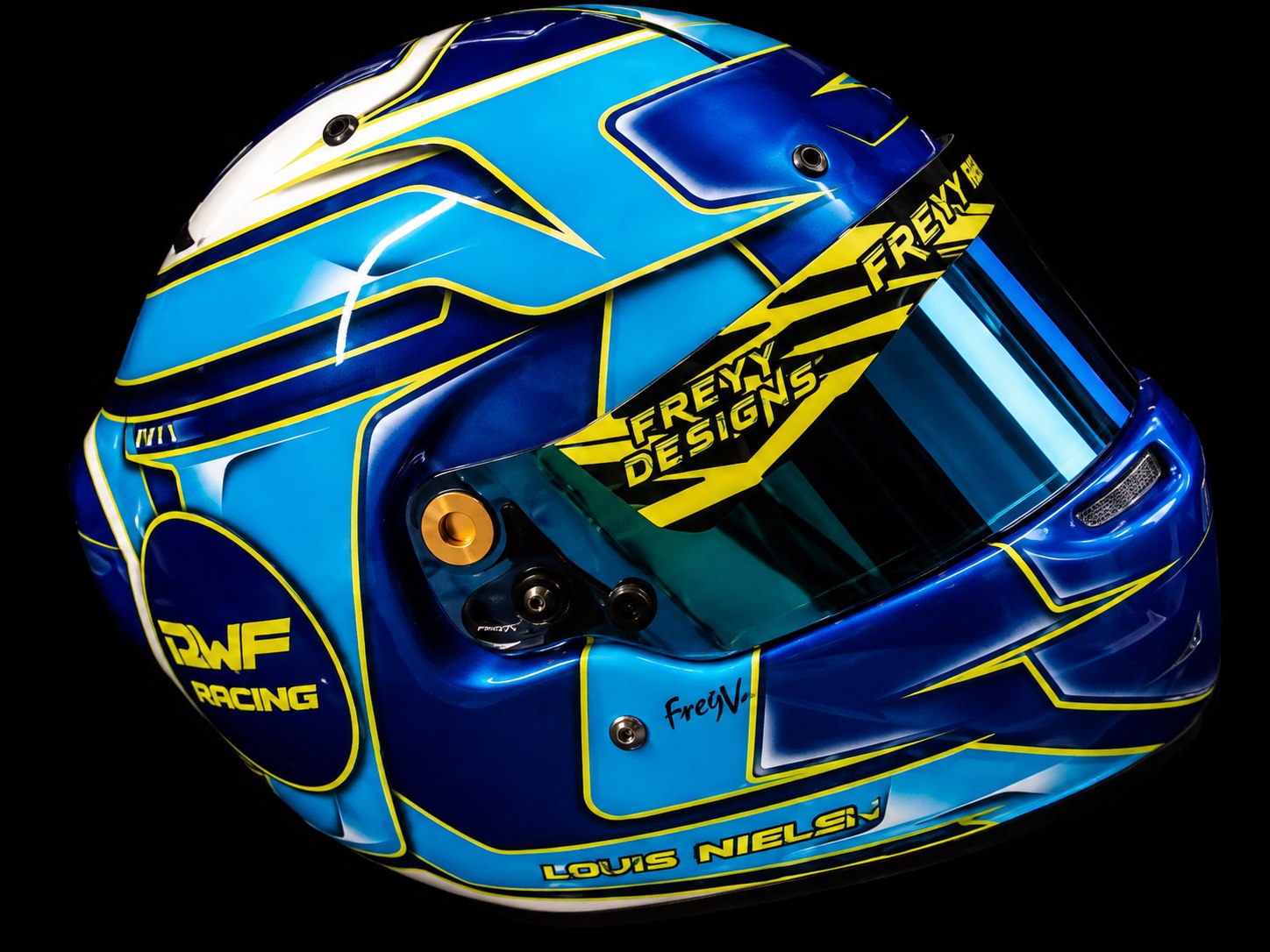
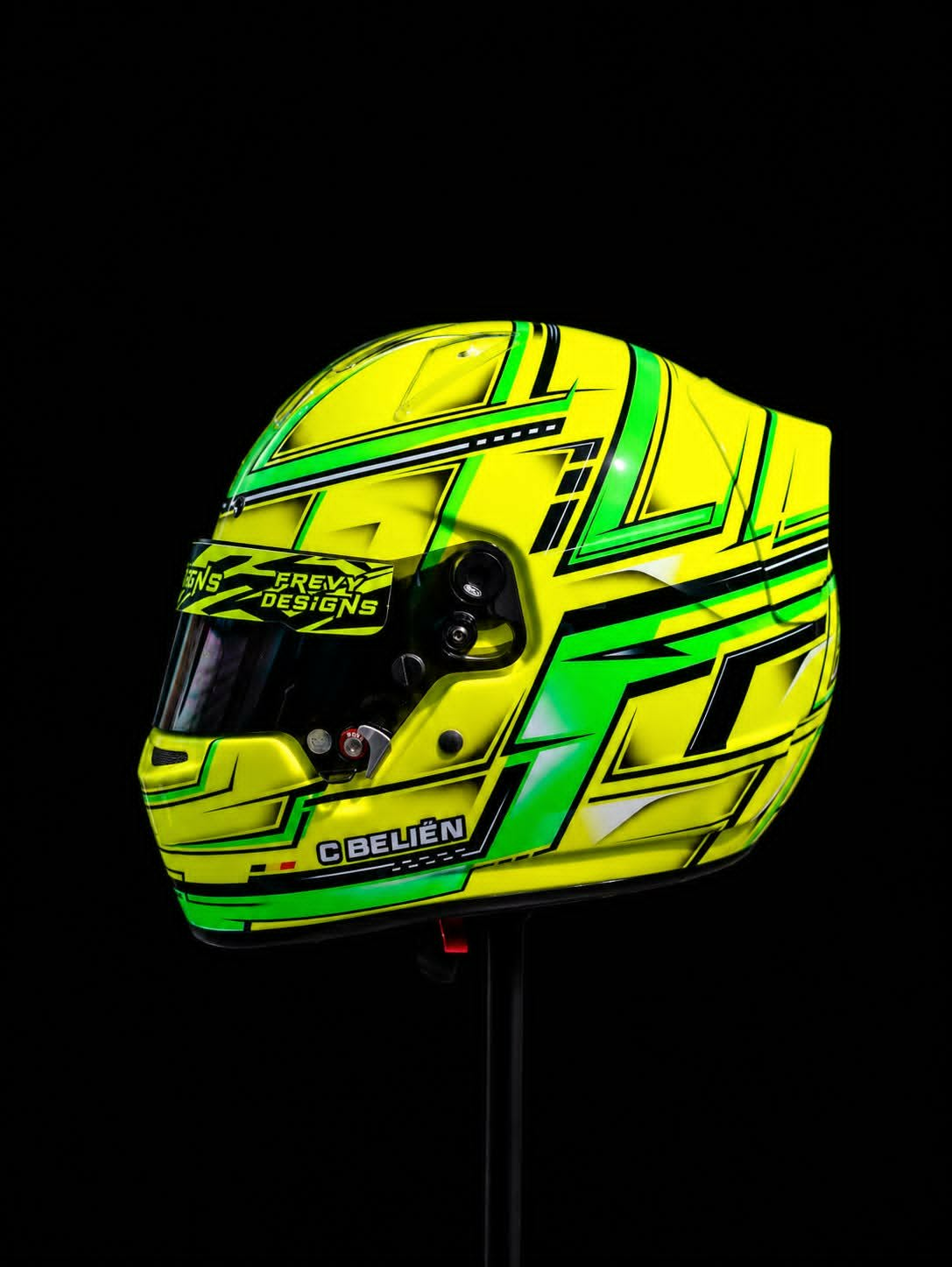
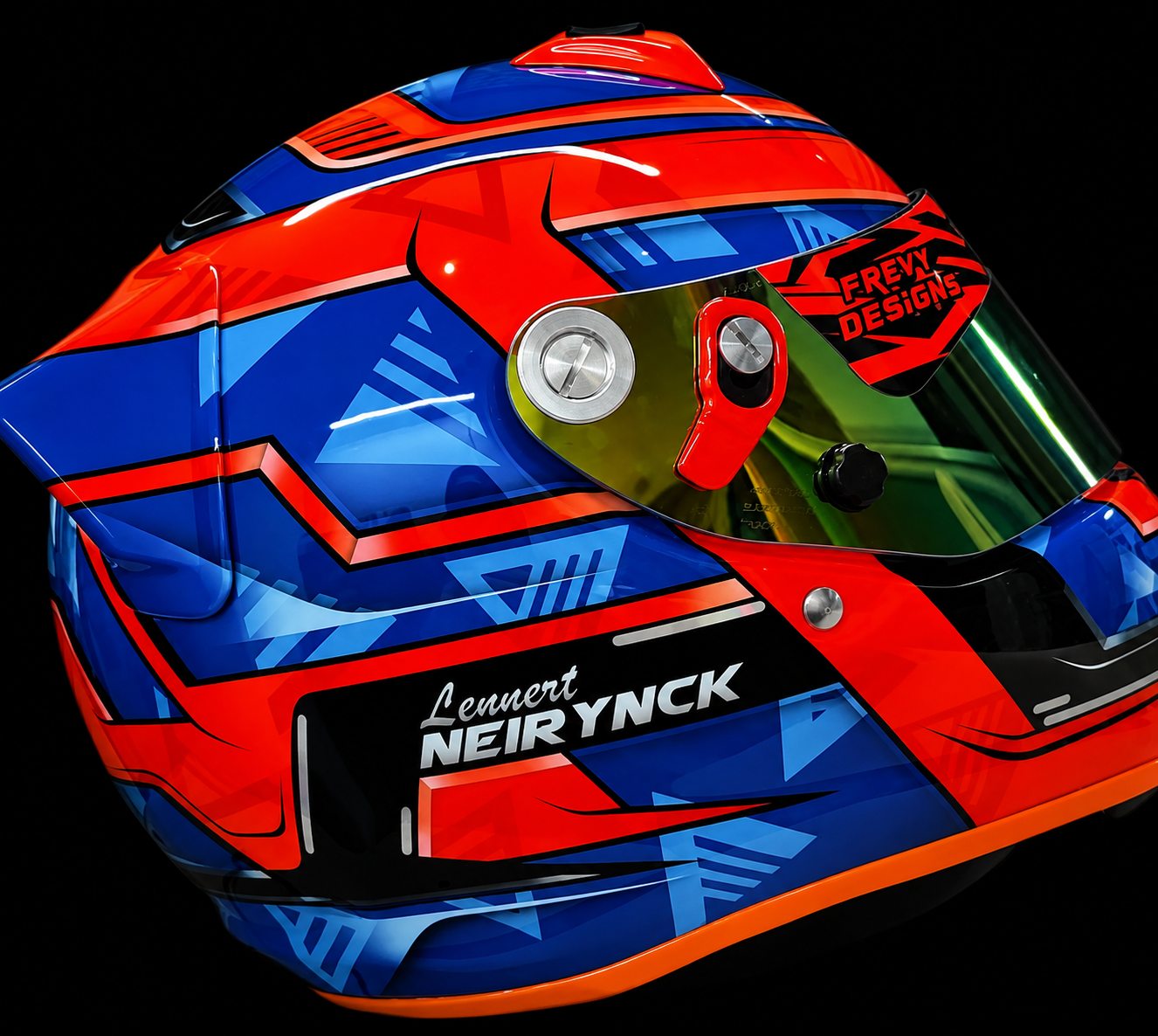
A limited palette looks stronger. Pick one dominant colour, one contrast colour and maybe one accent. Fluo yellow, for example, jumps out against blue or black: look at the helmets of Niels Feys and Clint Beliën.
3. Tell your own story
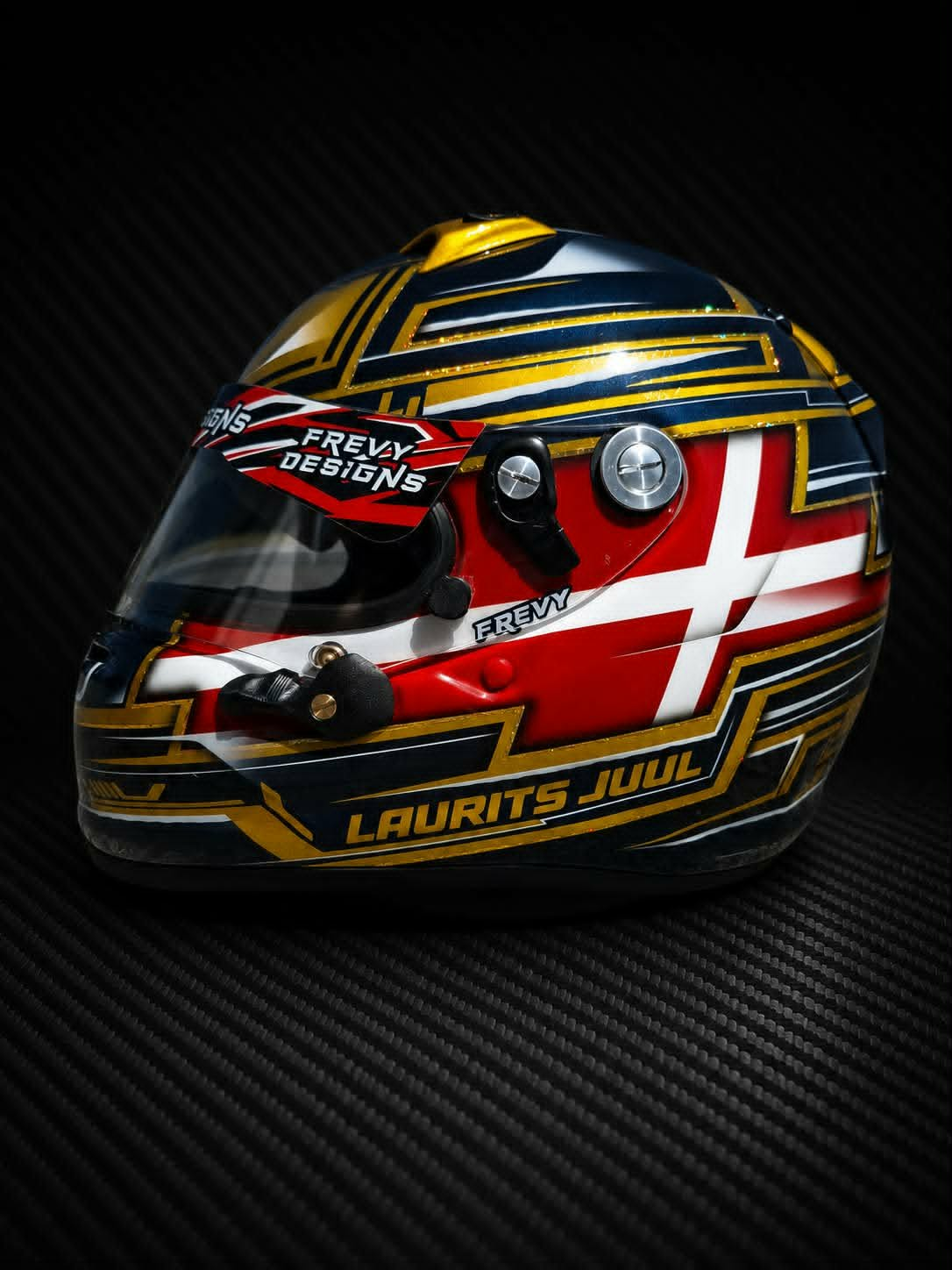
National colours, a family name, the number you have raced with since your first kart, a symbol that means something to you: personal elements are what make a helmet yours. Laurits Juul from Denmark went for navy and gold.
4. Think about the top view
In open-cockpit classes such as karting and single-seaters, the top of the helmet is often what cameras and spectators see most. A strong graphic or your number on top can pay off more than extra detail lower down.
5. Leave room for sponsors, and check the rights
Racing with sponsors? Decide upfront where their logos go, so they become part of the design instead of being added afterwards. If you supply logos or images, make sure you are allowed to use them.
6. Pick the finish that fits your style
The finish changes the whole character of a design:
- Gloss for deep, saturated colour
- Matte for a raw, modern look
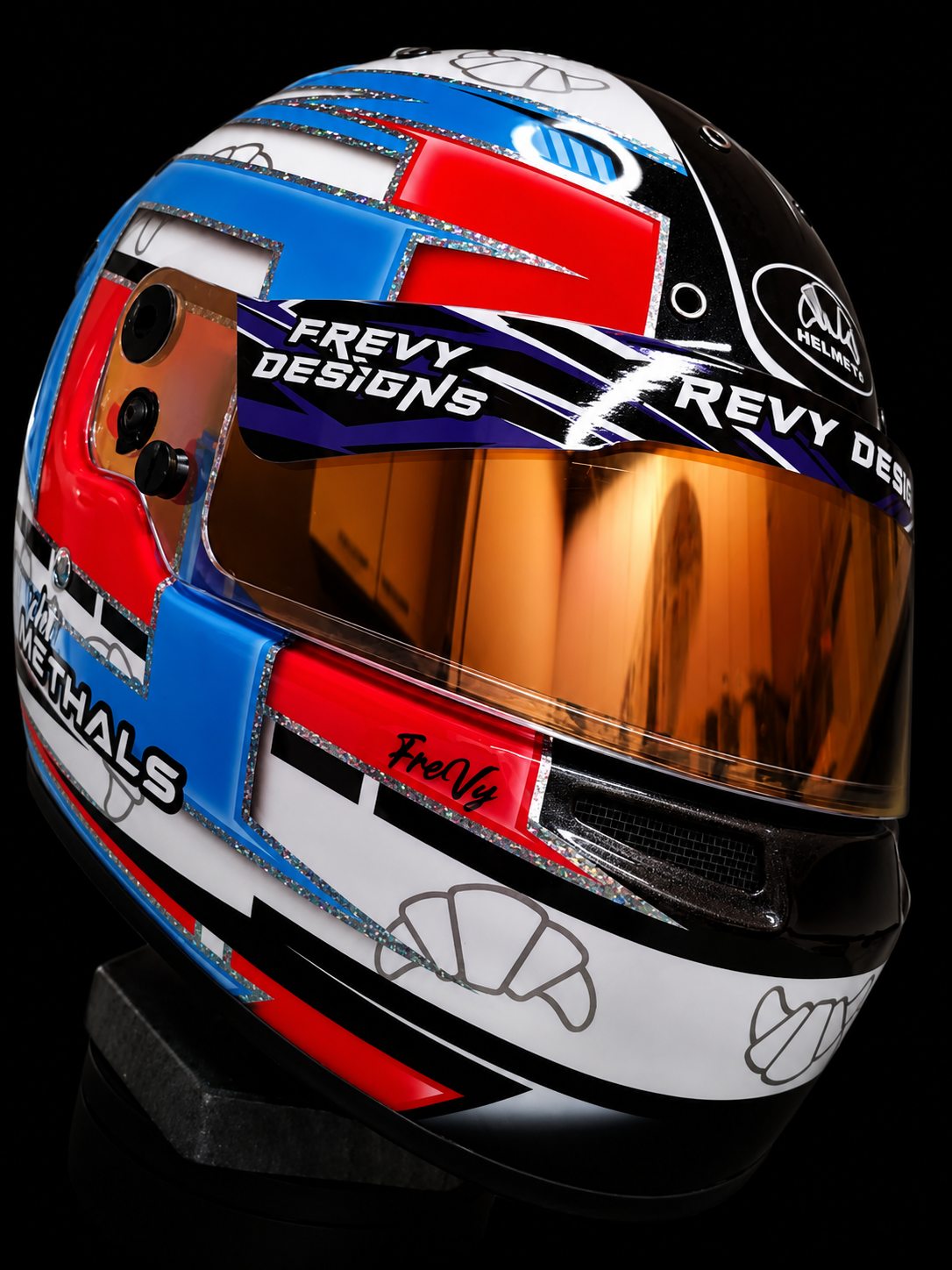
- Metallic flakes that catch the light
- Chrome paint or gold leaf for a real statement
- Carbon and gradients for depth
7. Bring references, but leave room for creativity
Photos of helmets, cars, logos or even fashion you like are really useful. A custom helmet is not a copy, though. The best results come when the designer has the freedom to turn your references into something new.
Already have an idea? Use the contact form and tell us about your helmet, your racing class and your timing.